
2026.10.04

ほとりで提供しているサービスの一つに『テーブル茶道』があります。ご指導いただくのは表千家講師の妹背佳子先生。海外だけでなく日本のゲストにもテーブル茶道を楽しんでいただいてとても好評です。
その妹背先生が指導されている生徒さん達がお茶をたてられる献茶会が松尾大社で開催されましたので、行ってまいりました。恥ずかしながら、お茶会に参加した事のない私。周りの皆さんを真似しながら、緊張しながら参加したのでした。
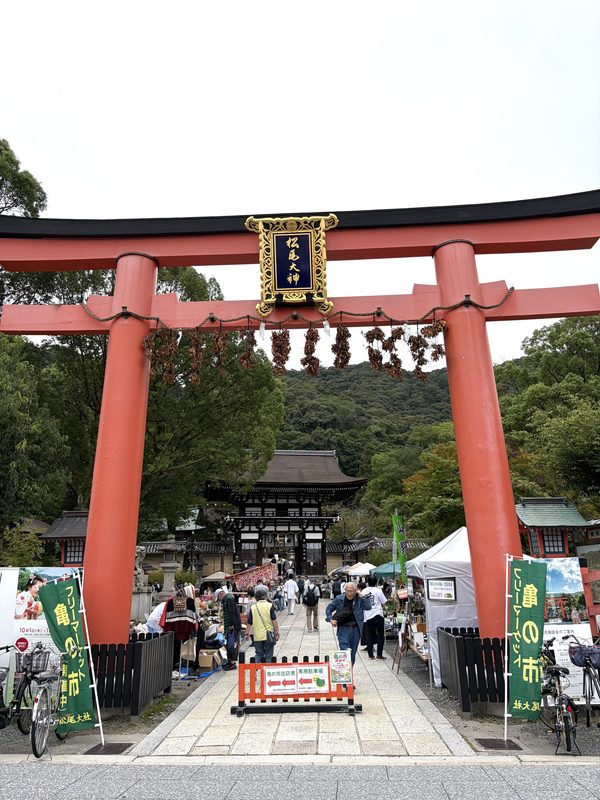
この日はフリーマーケットが開催されていて、鳥居周辺は賑やかです。献茶会は鳥居をくぐってすぐ右手のお茶屋さんの横にある蓬莱の庭を見渡せる客殿で開催されました。受付を通り、既にお客様も揃っておられて和やかな雰囲気です。
床の間には美しい書が掛けられ、季節のお花が可愛らしく生けられ、着物姿が美しい妹背先生が掛け軸や、茶器の説明をされています。

お茶の生徒さんがお点前をされている間、別の生徒さんたちがお菓子とお茶を運んでくださいます。以前、一度、妹背先生のお稽古に参加したことがあります。そのとき、一つ一つの動きに意味があり、次の動作へとつながっていく美しさを大切にされていることを知りました。
茶器の持ち方、指の添え方、歩き方、挨拶……。360度すべてに気を配りながらお稽古を重ねてこられたのだなと、妹背先生と生徒さんたちに心の中で敬意を払いながら、まずはお菓子を、そしてお茶をいただきました。家でいただく抹茶の気楽さとは違い、ほどよい緊張感の中でいただくお抹茶。とても学びの多い時間でした。
妹背先生は、一つ一つの器について説明をされ、お客様と和やかにお話をされながら、お茶会を進めていかれます。その様子を拝見して、「まさにマルチタスクの鑑だ」と感じました。もちろん、お茶、お菓子、お花、茶器、掛け軸、着物など、茶道にまつわるすべてのものに対する深い知識と愛情がなければ成り立ちません。献茶会に参加して初めて、茶会という場がどれほど多くの知識と心配り、そして準備の上に成り立っているのかを実感しました。


献茶会の後は、以前から気になっていた庭園を訪れました。
あいにくの雨でしたが、境内はほぼ貸し切り状態。本殿では神前結婚式が執り行われており、太鼓や笛の音が聞こえてきました。とてもありがたい音色を楽しみながら、曲水の庭を歩きます。
神像館では、ゆっくりと重要文化財の御神像を拝観。年表を眺めながら、松尾大社の長い歴史についても学ぶことができました。その後、上古の庭を通り、磐座へと続く入口の鳥居の前へ。そこで、なんともありがたい御神気を感じたのでした。古来、日本では山や岩など、自然そのものが御神体として祀られてきました。松尾大社は、そうした古代の信仰を今に感じることのできる、自然と一体になった神社なのだと実感しました。
献茶会で茶道の世界に触れ、庭園や御神像、磐座をめぐることで、今度は日本の自然信仰に触れることができて、思いがけず、さまざまな日本文化を一度に体験する一日となりました。
松尾大社の庭園は、昭和を代表する作庭家・重森三玲によって設計されたものです。今回の参拝をきっかけに、庭つながりで、いつか重森三玲の庭園をいくつか訪ねてみたいと思いました。献茶会から始まった松尾大社での一日は、思っていた以上に、私の「もっと知りたい」を刺激してくれる時間となったのでした。

One of the services we offer at Hotori is “Table Tea Ceremony.” Our instructor is Ms. Yoshiko Imose, an Omotesenke instructor. This experience has been very well-received, enjoyed not only by international guests but also by guests from Japan.
A tea ceremony was held at Matsuo Taisha Shrine, where Ms. Imose’s students prepared and served tea, so I went to attend.
I must admit, I had never participated in a formal tea ceremony before. I joined in, feeling a bit nervous, and tried to follow along with everyone else.
A flea market was being held that day, and the area around the torii gate was bustling. The tea ceremony was held in the guest hall, which overlooks the Horai Garden located next to the teahouse just to the right after passing through the torii gate.
As I passed through the reception area, I found that the guests had already gathered, creating a warm and friendly atmosphere.
A beautiful calligraphy scroll hung in the tokonoma, and a charming seasonal flower arrangement adorned the space. Ms. Imose, looking elegant in her kimono, was explaining the hanging scrolls and tea utensils.
While one student is performing the tea ceremony, other students serve sweets and tea. I once attended a lesson taught by Ms. Imose. At that time, I learned that she places great importance on the beauty of how each movement has its own meaning and flows seamlessly into the next.
How to hold the tea utensils, how to position one’s fingers, how to walk, how to greet others… Realizing that she must have practiced repeatedly while paying attention to every detail in a 360-degree field of view, I paid silent respect to Ms. Imose and her students as I first enjoyed the sweets and then the tea.
Unlike the casual way I enjoy matcha at home, this matcha was savored amid a pleasant sense of tension. It was a time filled with valuable lessons.
Ms. Imose explained each piece of tableware and proceeded with the tea ceremony while engaging in friendly conversation with the guests. Watching her, I felt she was “truly a paragon of multitasking.”
Of course, none of this would be possible without her deep knowledge of and love for everything related to the tea ceremony—the tea, sweets, flowers, tea utensils, hanging scrolls, kimonos and so on. It was only after participating in this tea ceremony that I truly realized just how much knowledge, care, and preparation go into making such an event possible.
After the tea ceremony, I visited the garden that had long piqued my curiosity.
Unfortunately, it was raining, but the shrine grounds were practically empty. A Shinto wedding ceremony was being held in the main hall, and I could hear the sounds of drums and flutes. I strolled through the Kyokusui Garden while enjoying those delightful sounds.
At the Shrine Statue Hall, I took my time viewing the sacred statues designated as Important Cultural Properties. As I looked over the timeline, I also learned about the long history of Matsuo Taisha Shrine.
After that, I walked through the Ancient Garden and arrived at the torii gate marking the entrance to the Iwakura. There, I felt a truly profound sense of divine presence.
Since ancient times in Japan, nature itself—such as mountains and rocks—has been enshrined as the divine object. I truly realized that Matsuo Taisha is a shrine that is one with nature, where one can still sense that ancient faith today.
By experiencing the world of the tea ceremony at the tea offering ceremony and exploring the gardens, the divine statues, and the Iwakura, I was able to encounter Japan’s nature-based beliefs—making it an unexpected day where I experienced various aspects of Japanese culture all at once.
The gardens at Matsuo Taisha were designed by Mirei Shigemori, a leading landscape architect of the Showa era. Inspired by this visit, I found myself wanting to visit some of Mirei Shigemori’s other gardens someday, drawn by the connection to gardens.
My day at Matsuo Taisha, which began with the tea ceremony, turned out to be a time that sparked my desire to “learn more” far more than I had anticipated.
Mikko