
2026.11.28

嵐山散策、第3段です。
二尊院拝観後、落柿舎前を通りがかった時、ご一緒していたゲストが松尾芭蕉の奥の細道を読んだばかりとのことで、急遽落柿舎にも立ち寄ることにしました。
江戸時代の有名な俳諧師・松尾芭蕉の弟子の向井去来(むかいきょらい)が入手して営んだ草庵が起源と言われています。
素朴な外観で、落ち柿に注意という看板が吊り下げられています。
茅葺き屋根の本庵の玄関には蓑(みの)と笠(かさ)が掛けられています。まるで日本昔話に出てくる昔の家の様です。それらが掛けられている時は主が居て、なければ不在を示していたそうです。おくどさんもあり、昔の生活の様子を垣間見る事ができます。
柿の木に少し残っていた柿は鮮やかなオレンジ色で美味しそうでした。
庭には季節の花が咲いていて、こじんまりしながらも、手入れの行き届いた大切に保存されている場所だと伝わってきます。松尾芭蕉が生涯で3回訪れたと言われている落柿舎。ここは混雑している嵐山の観光寺院の途中に立ち寄ると、ちょっとホッとできる場所です。


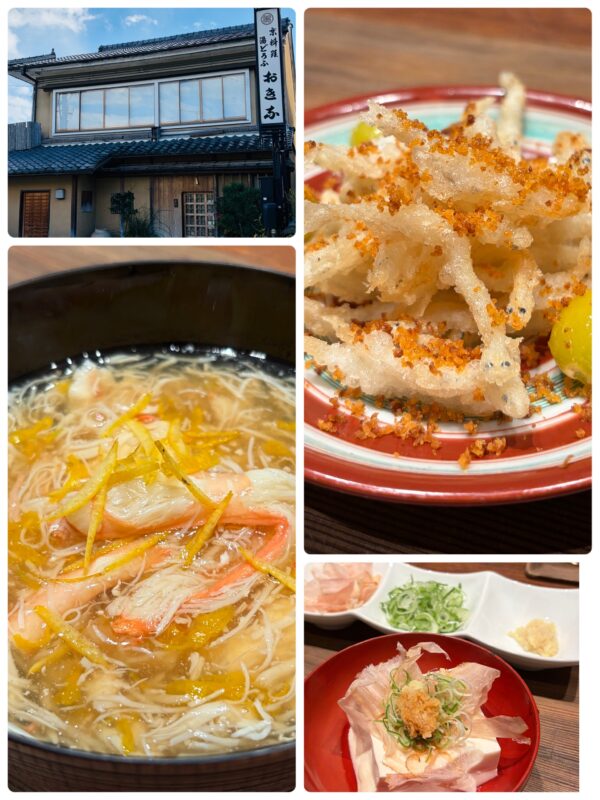
嵐山でのお食事に湯豆腐が人気です。お昼ご飯に伺ったのは『嵯峨おきな』さん。カウンターと個室一部屋の小さなお店でとても人気があります。とびきりチャーミングな女将さんが迎えてくださいました。ランチは季節のお料理から始まります。からすみのかかった白魚の天ぷら、昆布とカツオの出汁が美味しい蟹の身入り湯葉のあんかけと本当に美味しかったです。冷えた体があんかけのお陰ですっかり温まりました。天婦羅、刺身、湯豆腐などそれぞれが選んだメインディッシュを楽しみ、満腹の大満足でお店を後にしました。
その後向かったのは常寂光寺。小倉山に広がる広大な境内には外国人観光客が多く、多宝塔の向こうには京都市内が見えて、写真撮影の観光客で混みあっています。小倉山山麓に立つ常寂光寺、赤い紅葉と青い竹が綺麗でしたが、あまりの混雑具合に静かな時期にゆっくりと出直したいという気持ちになったのでした。
多すぎるほどお寺やみどころがある嵐山エリア。見たい場所を絞り、できるだけ早い時間に訪問し、お昼は予約したお店でゆっくりと過ごすのが一番良いスタイルかと感じました。


This is the third installment of my Arashiyama stroll.
After visiting Nison-in Temple, as we were passing by Rakushisha, one of the guests traveling with me mentioned that he had just finished reading Matsuo Basho’s *The Narrow Road to the Interior *, so we decided on the spur of the moment to stop by Rakushisha as well.
It is said to have originated as a thatched hermitage acquired and maintained by Mukai Kyōrai, a disciple of Matsuo Bashō, the famous Edo-period haiku poet.
It has a simple, rustic exterior, and a sign warning visitors to watch out for falling persimmons hangs from the entrance.
A straw raincoat and a straw hat hang at the entrance to the main thatched-roof hut. It looks just like an old-fashioned house straight out of a traditional Japanese folktale. Apparently, when these items were hanging, it meant the owner was present; if they were missing, it indicated the owner was away. There is also a traditional hearth, offering a glimpse into life in days gone by.


The persimmons still hanging on the tree were a vibrant orange and looked delicious.
Seasonal Japanese flowers were blooming in the garden, and though small, it felt like a well-maintained space that was cherished and carefully preserved. Rakushisha is said to be a place Matsuo Bashō visited three times during his lifetime. If you stop by here on your way to the crowded tourist temples in Arashiyama, it’s a spot where you can take a moment to relax.
Yudofu(hot tofu pot) is a popular choice for dining in Arashiyama. For lunch, we visited “Saga Okina.” It’s a small, very popular restaurant with a counter and just one private room. We were greeted by the exceptionally charming proprietress. Lunch began with seasonal dishes. The tempura of whitebait topped with karasumi and the yuba in a thick sauce filled with crab meat—simmered in a delicious dashi broth made from kelp and bonito—were truly delicious. The thick sauce completely warmed our chilled body. We enjoyed the main dishes we each chose—tempura, sashimi, and yudofu—and left the restaurant feeling full and thoroughly satisfied.
Next, we headed to Jōjakkō-ji Temple. The vast temple grounds stretching across Mt. Ogura were filled with foreign tourists; the city of Kyoto was visible beyond the Tahō-tō pagoda, and the area was crowded with tourists taking photos. Jōjakkō-ji Temple, standing at the foot of Mt. Ogura, was beautiful with its red autumn leaves and blue bamboo, but the place was so crowded that I found myself wishing to return at a quieter time to explore it at a leisurely pace.
The Arashiyama area has more than its fair share of temples and attractions. I realized the best approach is to narrow down the places you want to see, visit them as early as possible, and then spend a leisurely lunch at a restaurant where you’ve made a reservation.
I hope you will enjoy yourself in Arashiyama to the fullest.
Mikko