2026.11.23
嵐山散策第2段です。
祇王寺の後は二尊院を尋ねました。門の前には「紅葉見頃です」と大きく習字で書かれた看板が出ていました。次々に参拝客が門に吸い込まれていきます。
入る前からいかにも嵐山の中でも人気の紅葉の名所であることが伝わってきました。小倉山の斜面に向かうように真っすぐの参道を進み、そして石段を上がっていきます。五万坪あるだけあり、本堂に辿り着くまでの石段はなだらかですが結構な距離がありました。その両脇には見事に赤くなった紅葉がアーチの様に植わっています。あまりの見事さに、写真撮影しているとなかなかたどり着けません。犬連れの参拝客もおられて綺麗な紅葉とともに記念撮影されていました。石段を登り切ると、振り返って登ってきた道を確認します。上る時も美しいのですが、振り返ってみる紅葉の景色もまた美しいのです。


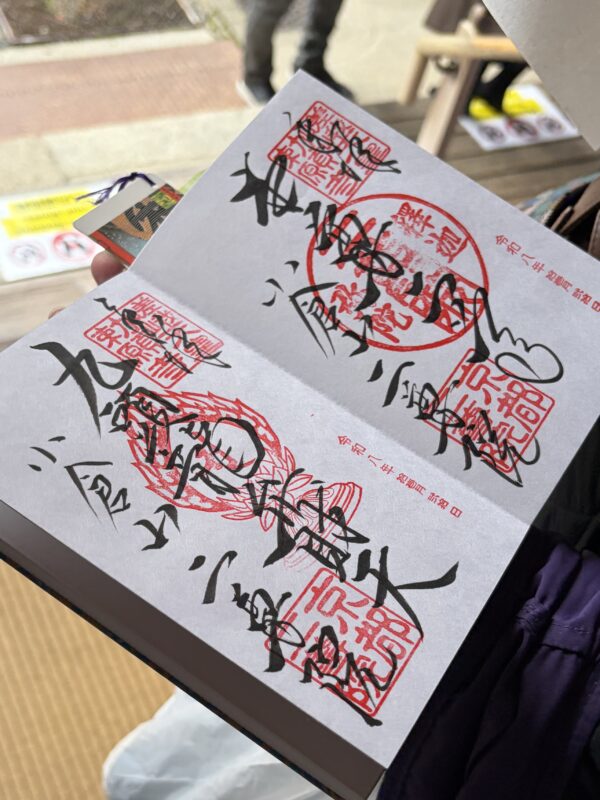
靴を脱いで本堂にあがります。普通お寺にはご本尊が一体おられますが、ここでは二尊院というお寺の名前の通り、御本尊が二体いらっしゃいます。本堂右側の釈迦如来様は極楽浄土へ送り出す役割(発遣の釈迦)、左側の阿弥陀如来様は彼岸へ迎える役割(來迎の阿陀)です。本堂奥まで少し距離があり暗いのではっきりとお顔までは見えませんが、少し青白く光った様にかすんで見える二体を拝みました。本堂で重要文化財の御本尊が二体並んだ仏像を拝むことは当然他のお寺では経験ありませんので、とても貴重な参拝でした。
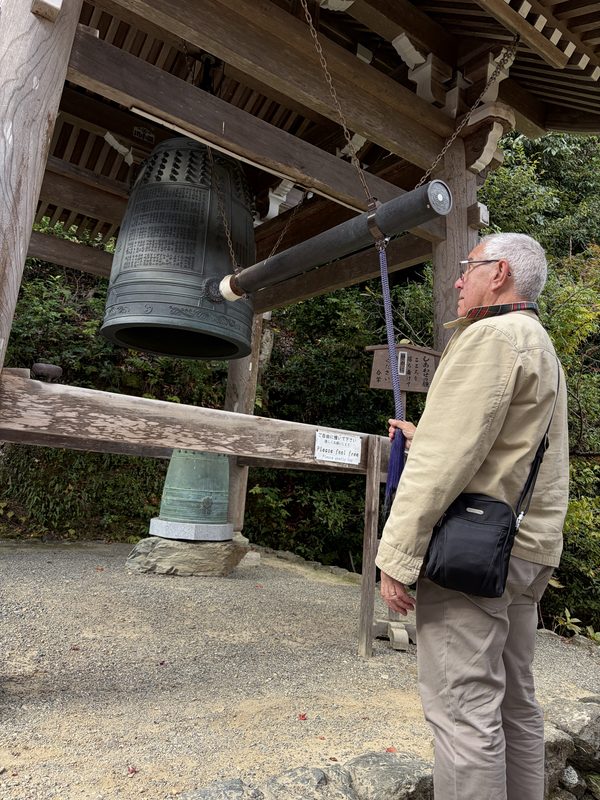
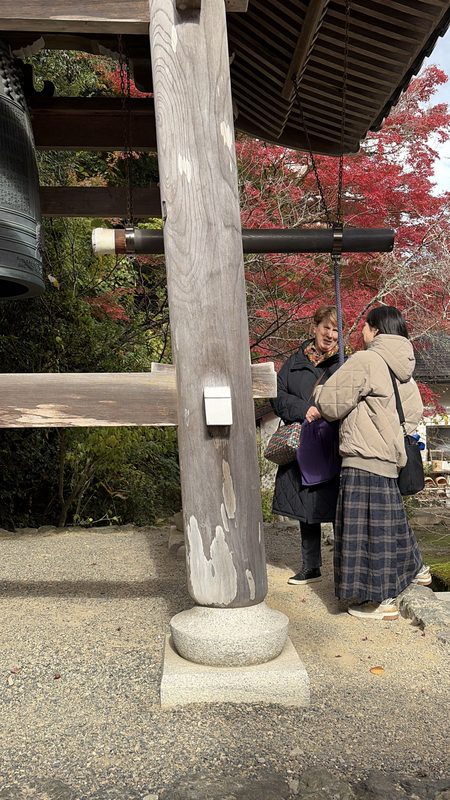
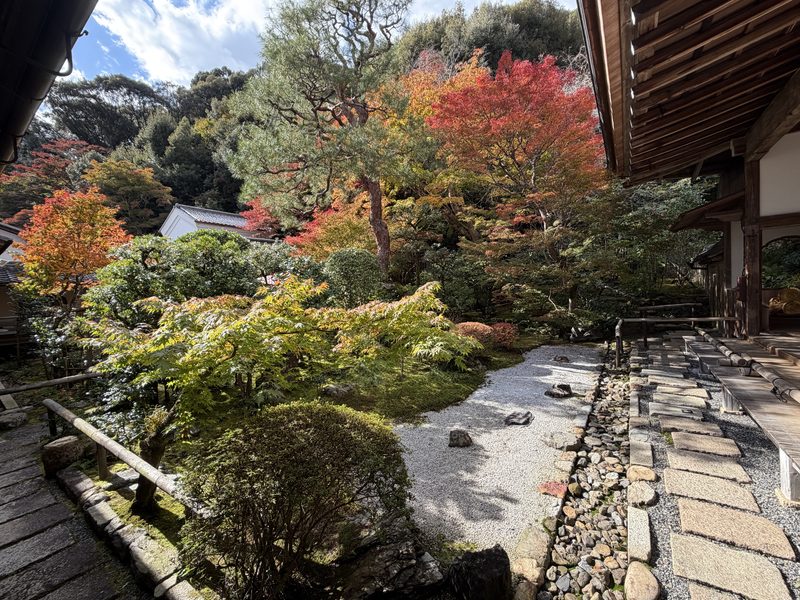
その後、本堂の裏に周り、かわいらしい六地蔵さんが山の斜面のあちこちに立たれている様子を見ながら美しい庭を眺めました。参拝者が自由に突ける「しあわせの鐘(鐘楼)」を一緒に行ったゲストが3回ついて、幸せを祈願しました。
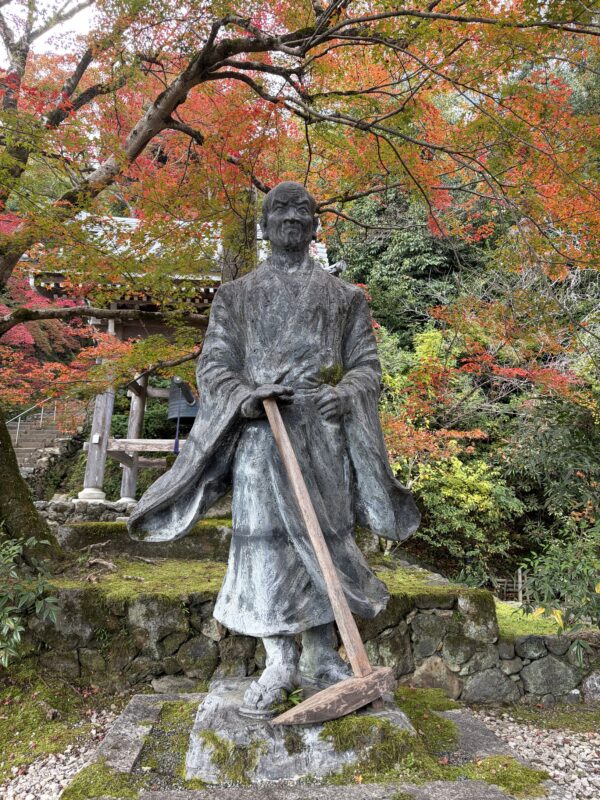
二尊院は角倉了以(すみのくらりょうい)の菩提寺でもあるので、立派な銅像が立っていました。京都から大阪への物流と経済の発展に大きく貢献した、江戸初期の豪商で、高瀬川と保津川を開削した人です。二尊院には、千二百年の歴史上の天皇の御分骨があり、そして京都の発展に不可欠な人物のお墓があり、京都にとってとても大事なお寺です。
赤いもみじも美しいですが、新緑の季節にまた来たいと思うお寺でした。
This is the second blog of my Arashiyama stroll. After visiting Gio-ji Temple, we headed to Nison-in Temple.
In front of the gate, there was a sign with the words “Maple leaves are at their peak” written in large calligraphy. Visitors were streaming through the gate one after another.
Even before we went inside, it was clear that this was one of Arashiyama’s most popular spots for viewing autumn foliage. I walked straight down the approach path, which seemed to lead toward the slope of Mt. Ogura, and then climbed the stone steps. As expected of a temple covering 50,000 tsubo, the stone steps leading to the main hall were gentle but quite a long way up. On both sides, maple trees that had turned a magnificent red were planted in an arch-like formation. The scenery was so stunning that I kept stopping to take photos and couldn’t seem to reach the top. There were also visitors with their dogs, taking commemorative photos against the backdrop of the beautiful autumn foliage. Once I reached the top of the stone steps, I turned around to look back at the path I’d climbed. While the view on the way up was beautiful, the sight of the autumn leaves when looking back was equally stunning.
Took off our shoes and entered the main hall. While most temples have a single principal image, as the name “Nison-in” suggests, this temple houses two principal images. The Shakanyorai Buddha on the right side of the main hall serves to send believers to the Pure Land of Bliss (the “Sending-Off Shakanyorai”), while the Amida Buddha on the left serves to welcome them from the Pure Land (the “Welcoming Amida”). Since the back of the main hall is a bit far away and dimly lit, I couldn’t see their faces clearly, but I paid my respects to the two statues, which appeared faintly pale and glowing. Since I’ve never before had the experience of paying respects to two principal Buddha statues designated as Important Cultural Properties standing side by side in the main hall at any other temple, this was a truly precious visit.
Afterward, I walked around to the back of the main hall and admired the beautiful garden while observing the charming Six Jizo statues standing here and there on the mountainside.
My guests who who accompanied me rang the “Bell of Happiness” (bell tower)—which visitors are free to ring—three times to pray for happiness.
Since Nison-in is also the family temple of Sumino-kura Ryōi, a magnificent bronze statue of him stood there. He was a wealthy merchant of the early Edo period who contributed greatly to logistics and economic development between Kyoto and Osaka and was the person responsible for dredging the Takase and Hozu Rivers. Nison-in houses the remains of emperors spanning 1,200 years of history, as well as the grave of a figure indispensable to Kyoto’s development, making it a temple of great importance to the city.
While the red maple leaves are beautiful, this temple made me want to come back during the season of fresh greenery.
Mikko